



Edenred UK
The Focus
Employee benefits and engagement platform: Edenred UK, now trading as Reward Gateway | Edenred, gives employers one platform for employee benefits, discounts, reward and recognition, and wellbeing. It serves organisations from small businesses to large enterprises. Globally it supports over 10 million employees across 6,000+ businesses, and it reaches 1 in 3 UK employees.
Edenred UK wanted a scalable inbound marketing engine to generate B2B leads for its SaaS platforms, including the Edenred Savings platform. The paid search budget was bringing in traffic, but it wasn’t converting efficiently enough. Cost per lead was high, the key landing pages weren’t built to capture intent, and the team needed a clear view of which search terms were actually producing leads.
Specifically our objective was to:
- Use Search to Drive Leads Straight Away
- Test & Learn to Drive Efficiencies
- Analyse Business Data to Optimise Marketing
The Strategy
Paid Search to Capture Demand Immediately
HR and people leaders search actively for terms like “employee benefits”, “employee perks” and “employee discount schemes”. We built and managed Google Ads campaigns around these high-intent terms so that Edenred appeared at the moment of need and generated leads from day one.
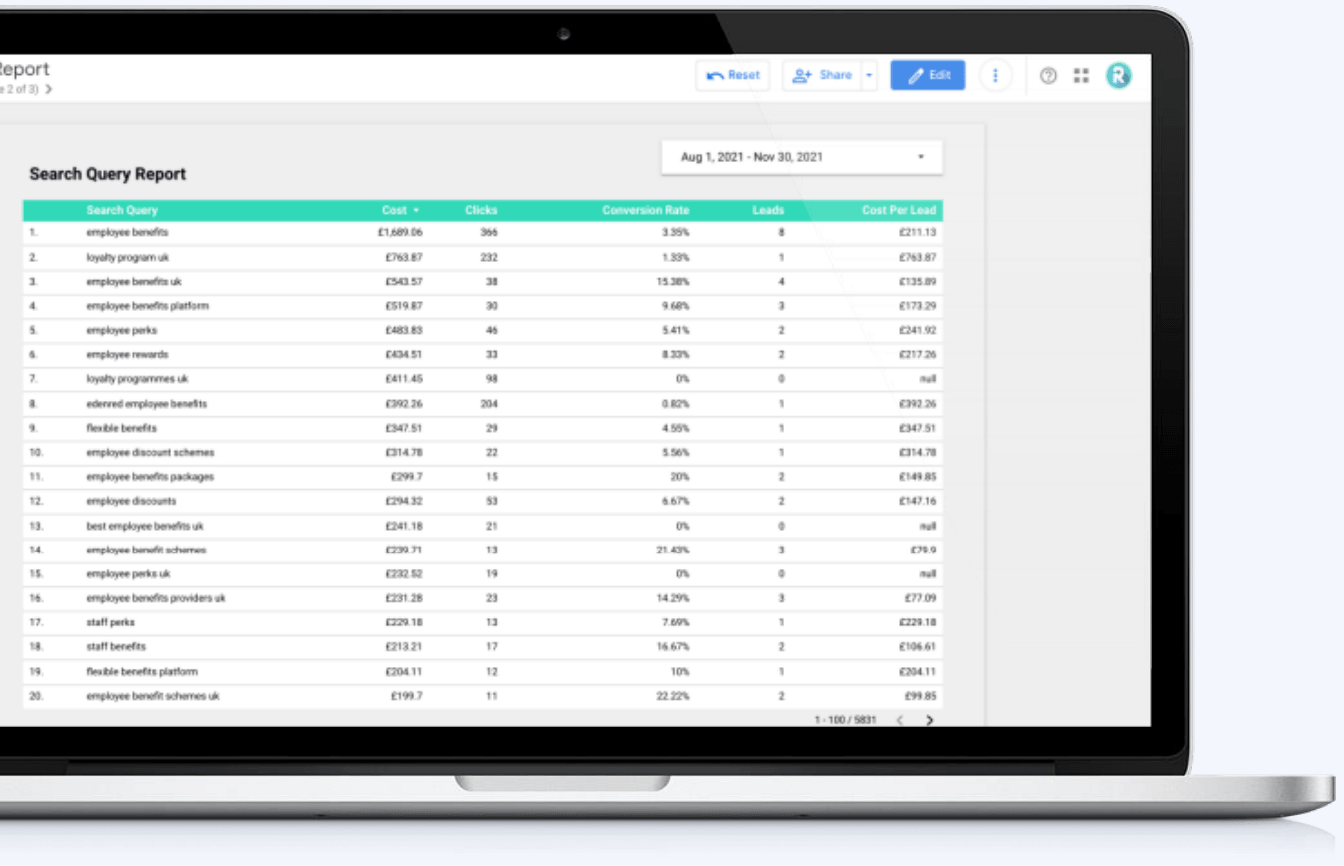
From there, we used search query reporting to track cost, clicks, conversion rate, leads and CPL for every search term. This showed which queries were producing leads and which were only spending budget. We then refined targeting, bids and negative keywords to put spend behind the terms that converted.
Landing Pages Built to Convert
Traffic is only as valuable as the page it lands on. We designed and deployed optimised landing pages for Edenred’s platforms, built around one clear action.
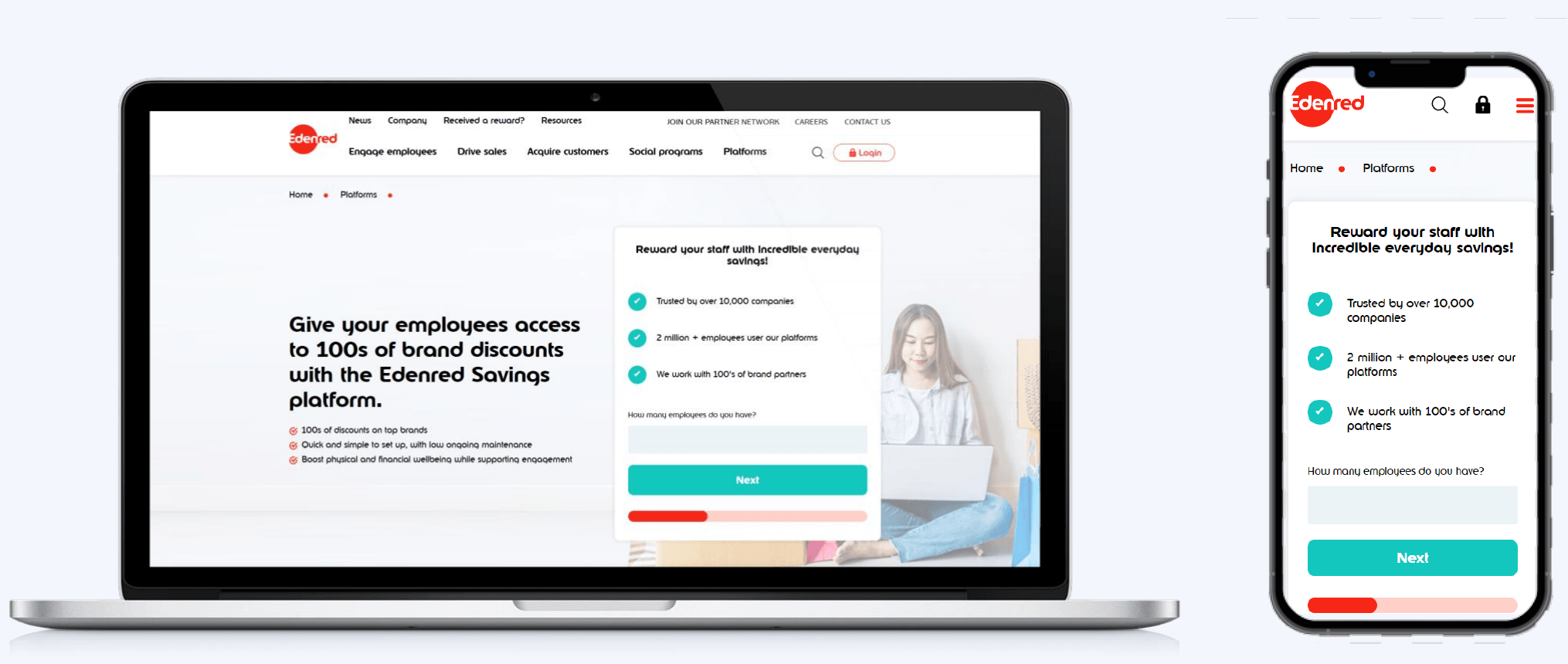
These pages led with the core benefit: “Give your employees access to 100s of brand discounts.” They backed it up with trust signals such as “Trusted by over 10,000 companies” and “2 million+ employees use our platforms”. Each page used a multi-step lead form that opened with a single easy question: “How many employees do you have?” Every page was fully responsive, so the experience worked as well on mobile as on desktop.
A/B Testing the Key Conversion Page
We identified the homepage as the key conversion page and ran a controlled A/B test against the existing design.
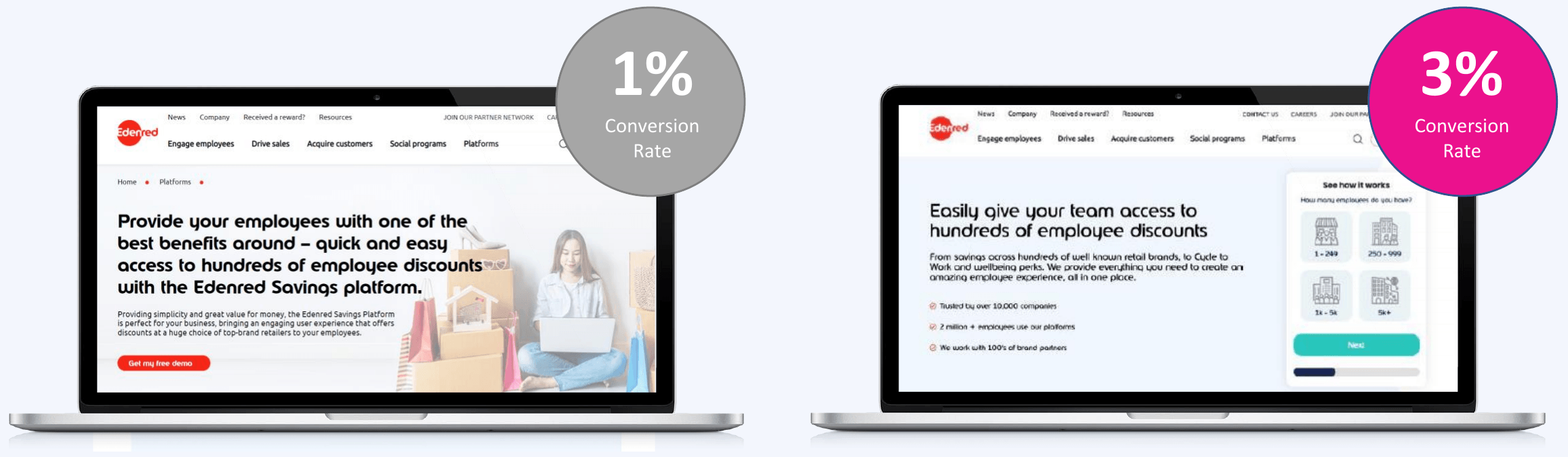
- Control: a long-form headline, paragraph copy, and a “Get my free demo” button
- Variation: a shorter, benefit-led headline, key information in bullet form, trust signals up front, and a sticky multi-step form asking for company size with visual selectors (1–249, 250–999, 1k–5k, 5k+)
Breaking the form into stages lowered the effort needed to start. It also qualified leads by company size as they came in.
Data-Led Optimisation
We kept a continuous test-and-learn loop running on the account.
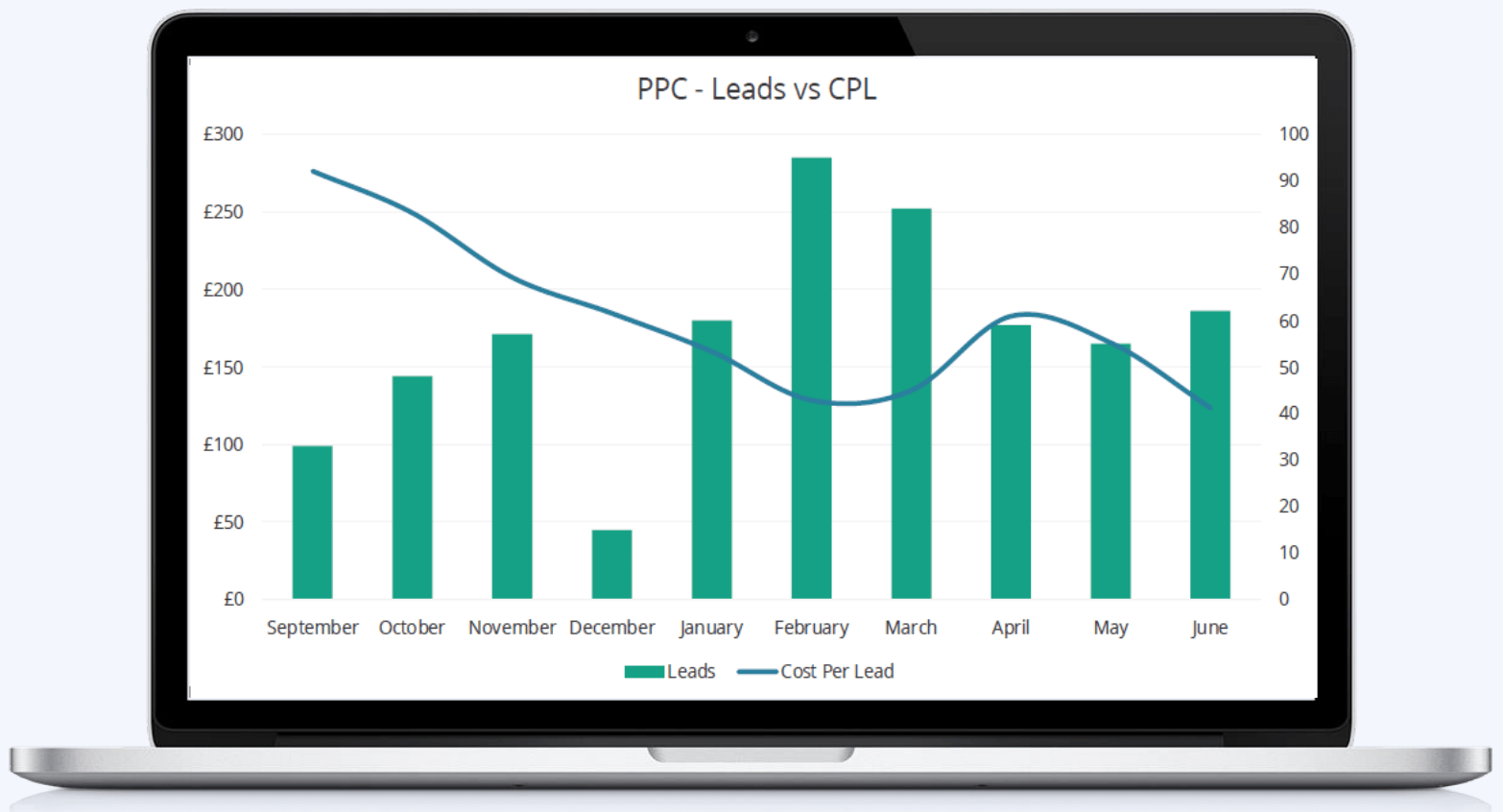
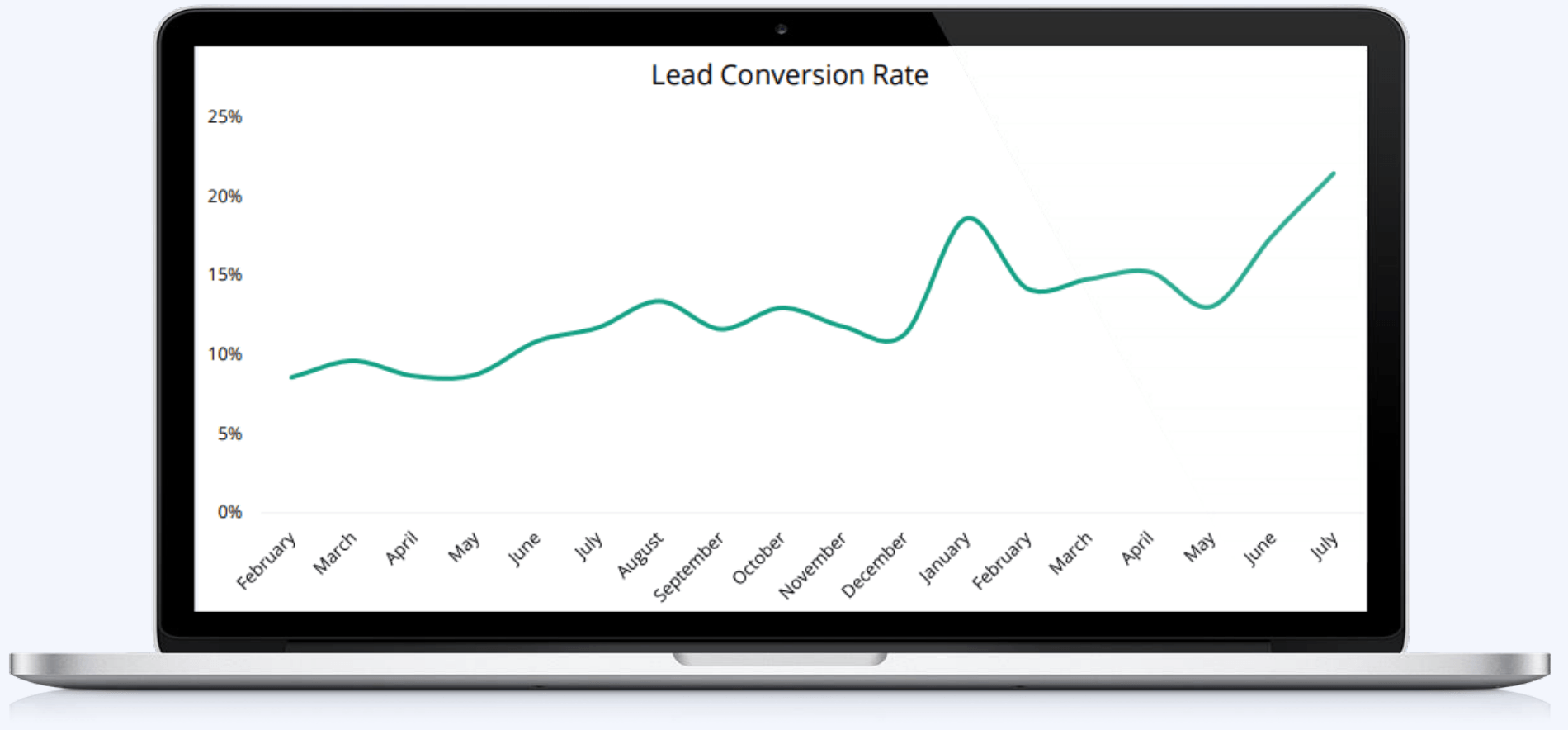
Every month we reviewed leads against cost per lead, checked conversion by search term, and fed what we learned back into bids, copy and landing pages. The next phase of testing focused on three areas:
- Form development: refining the fields and steps to lift completion further
- Upper-funnel conversions: capturing earlier-stage interest to build the pipeline
- PPC search term refinement: tightening targeting to push CPL down further

The Results
Across the last 14 months, we've so far achieved the following for CPS:

